.png)
Who Feels What at Work?

Updated: Aug 28, 2025
Emotional Profiles Across Job Roles
In every workplace, emotions are at play—shaping how people collaborate, perform, and respond to challenges. Yet most teams operate without ever understanding these emotional dynamics. When we measure emotions across different roles, we uncover patterns that help organizations boost performance and build stronger, more resilient teams.
Why Emotional Profiles Matter in the Workplace
Emotions don’t just influence individual performance; they shape culture. When groups understand their dominant emotions, they can better predict how teams will respond to stress, adapt to change, or sustain motivation. This isn’t about labeling people as “positive” or “negative”—it’s about mapping how emotions enhance or inhibit momentum so organizations can act with insight.
Visual Insight: How Educators Experience Achievement Emotions
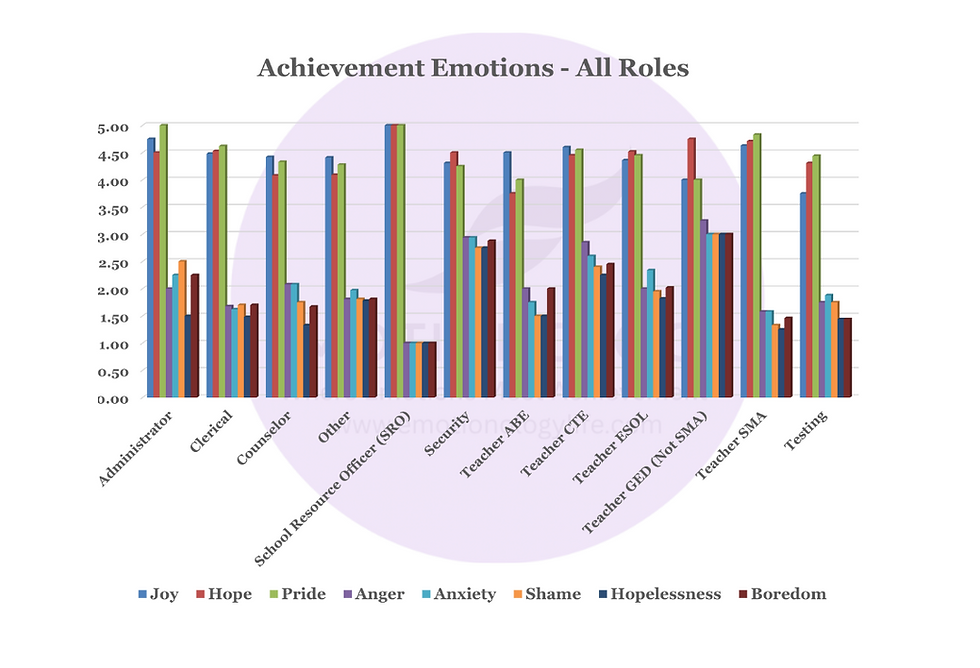
This graph presents real data from 160 educators across three school buildings in South Florida, capturing how the eight core achievement emotions—Joy, Hope, Pride, Anger, Anxiety, Shame, Hopelessness, and Boredom—are experienced across various job roles.
A few patterns stand out:
Administrators and Testing staff showed consistently high Pride and Joy scores, suggesting a strong sense of engagement and accomplishment.
Security staff and certain instructional roles (like ESOL teachers) showed elevated Anger and Anxiety, which, if unmanaged, can cluster with Hopelessness and Shame—potentially undermining focus and resilience.
Enhancing vs. Inhibiting Clusters: Emotions don’t act alone. Joy, Hope, and Pride tend to enhance each other, amplifying motivation, while emotions like Boredom, Shame, and Hopelessness often cluster and inhibit positive momentum.
It’s important to note that these findings reflect this specific group—160 educators in three South Florida schools. Patterns may vary in different schools, regions, or industries.
That’s why measuring emotions matters. General data like this can spark curiosity, but personalized or team-based emotional profiles reveal how emotions actually interact for you or your organization—so you can build strategies around real, actionable insight.
Where would your role or your team fit on a chart like this? Which emotions enhance your results, and which clusters hold you back? Most importantly, how would knowing this data help you perform, lead, or collaborate better?
Why Teams Need More Than Averages
While charts like these highlight trends, every organization is unique. Two schools—or two departments within the same company—can show completely different emotional profiles, even when facing similar challenges. Understanding your own team’s emotional map allows leaders to:
Identify which roles or groups need support or rebalancing.
Harness enhancing emotions like Joy, Hope, and Pride more effectively.
Address clusters of inhibiting emotions before they derail performance.
Informed action starts with measurement.
Ready to Map Your Team’s Emotional Profile?
Stop guessing about your team’s dynamics. Measure them.
Order a Team Emotional Map or Individual Emotional Profile Assessment today to discover how emotions enhance and inhibit results in your workplace—and get strategies tailored to your organization’s needs.


Comments